Friday, January 27, 2012

The Importance of Being an Artist: One listener's virtual interpretation of 'Evening' from 'Slow to Burn

Art is the greatest equalizer. Whether Democrat, Independent, Progressive, Republican or Undecided, Art - music, literature, painting, poetry - serves to communicate our collective ideals, values, and beliefs: our fears, frailties, strengths and desires.

Music is perhaps the most potent and vital art because it pulses, it breathes, it inhabits the spaces in which we gather; it haunts our dreams and awakens our memories. Music ignites our unconscious and fires our imaginations. 

It is that same core of our humanity that is touched by Mozart, Pink Floyd, Billie Holiday, The Knife, Francoise Hardy and Etienne Daho, irrespective of the listener's political leanings.

We live in virtual as well as tangible realm. One feeds the other in multiple and manifold ways. To be an artist is to live in all realms simultaneously, detecting the subtle flickers of existence that would otherwise go unnoticed. To the artist, everything is worth noticing.

The virtual world is a means for connecting but can often be distancing, as well. For me, making music achieves the most direct form of communication of all the arts, as it reaches the listener's ear with no intermediary. This video by CreativeGeniusAtWork illustrates this - virtually and beautifully.


Thursday, January 26, 2012

MOONSHINE: Coming soon | Joe Sent Me 'Moonshine' Mixes


"Moonshine (meaning illicit distillation, also called white lightning, mountain dew, hooch" Wikipedia

 "On this day in 1833: Southern state illegalizes hooch on this date, officially names Coltrane new sheriff."

Wednesday, January 04, 2012

Music & Revolution: The Political is Personal - aRUDE Magazine


For those of you who missed my Tweets & FB posts on my recent piece 'Music & Revolution: The Political is Personal' for aRUDE Magazine:

Mahatma Gandhi‘s passive resistance was rooted in the idea that the greatest revolutionary act is borne in the quiet of one’s mind. Resistance manifests itself in manifold ways, sometimes with anger and aggression and other times in stillness and silence. What all revolutions have in common is the resolute mindset of each participant: to resist and remain standing. Standing up against tyranny and oppression is  a rebellious act, an irreverent, irrepressible act.

While it has become an accepted Truth that ‘The Personal is Political’, the reverse also holds true; ‘The Political is Personal’, and nothing is more personal than the music one chooses to live by, to be inspired by, and be guided by. Music and revolution walk hand in hand, and while each Revolution aspires to its own unique ideals, music is one thing they all have in common.  Whether RiotGrrl or RudeBoy, singing “We Shall Overcome” or “Occupy D.C.”, all Revolutions are fueled by words that are poetic, raw, and real – whether they’re scrawled on walls or carefully articulated in Mantras and Manifestos. Throughout history, protesters have marched to songs that speak to their individual as well as collective pain, purpose and philosophy.

In today’s virtual landscape of crowd-sourced revolution, we’ve become used to the images of ‘Revolution’, the ones that typically make the headlines: photos of protesters pressing together en masse, compressed in their fury and urgency. Our collective histories tell the visual tales: The French Revolution, The American Revolution, The Industrial Revolution, The Egyptian Revolution, The New Feminist Revolution – Great throngs that have gathered to stand up against tyranny, oppression, ideology, regime.

Read the full post @ aRUDE

Monday, November 14, 2011

JOE SENT ME rmxs on mark reeder's new album - five point one


"british label chief, producer and musician mark reeder is a product of what many regard as the golden age of science fiction. he grew up in an england dominated by security forces of the future with outsize heads jiggling on strings to save the world from intergalactic menaces, in hit after hit from the gerry anderson stable. he saw doctor who take his first tentative steps into the past and the future on carboard sets populated by jumble sale aliens. in cinema there was the constant threat of communist stealth attacks always from mars or the psychadelic trip that was stanley kubrick’s 2001: a space odyssey. he was fascinated by the synthetic electronic pulsations of the forbidden planet and clockwork orange soundtracks and devoured fan magazines like TV21. wobbly spaceships, cardboard robots, ray guns and bug-eyed monsters; as a child he was drawn to this sometimes quaint, sometimes ominously correct visions of the future. it should come as no surprise then that five point one, his debut compilation of remix work, should concern itself as much with modern technology as it does with music.
 
five point one presents a hand-picked selection of some of reeder’s remixes remastered and re-mixed in crystal clear dolby digital 5.1 surround sound. present is his work for legendary heavyweights such as the pet shop boys and sam taylor-wood, john foxx, anne clark, die toten hosen or former new order as bad lieutenant, vanessa daou or blank&jones, plus an exclusive remix he made for depeche mode, while reeder also puts his particular retro synth-pop spin on tracks from up-and-coming artists such as echoes, electrobelle, fidelity kastrow, may68 or noblesse oblige.

five point one is a deluxe collection of some of the best of reeder’s recent work, a deluxe DVD and 2CD package, gloriously remastered in dolby 5.1 surround sound, creating a listening experience which enhances the depth and radiance of reeder's original stereo mixes, all of which are also included on two CDs for a traditional 2.0 stereo sound system too."

Read more

Tracklist

DVD 5.1 surround remixes

total time 97:16
  • 01 John Foxx – Underpass (mark reeder's sinister subway remix edit)
  • 02 Bad Lieutenant – Twist of fate (mark reeder's led's twist again remix)
  • 03 Noblesse Oblige – Duel (mark reeder's shot at the crack of dawn remix)
  • 04 Marsheaux – So Far (mark reeder's so close remix)
  • 05 Depeche Mode – Sweetest Perfection (mark reeder's sweetest conception remix)
  • 06 Echoes – Ice Cold (mark reeder's cold as ice remix)
  • 07 Blank & Jones, Mark Reeder featuring Vanessa Daou – Heart Of Wax (heart of crystal mix)
  • 08 Anne Clark – Full Moon (mark reeder's stairway to the stars remix)
  • 09 Vanessa Daou – Black & White (mark reeder's monochrome mix)
  • 10 Sam Taylor-Wood with The Pet Shop Boys – I'm in Love with a German Film Star (mark reeder's rias remix)
  • 11 Spartak – Lets Go Get 'Em (mark reeder's no pain, no gain remix edit)
  • 12 Electrobelle – Falling (mark reeder's in your arms remix edit)
  • 13 Fidelity Kastrow – 21st Century Girl (mark reeder's strident remix edit)
  • 14 May68 – The Prisoner (mark reeder's runaway remix)
  • 15 Parralox – Sharper Than a Knife (mark reeder's cutting edge remix edit)
  • 16 Bad Lieutenant – Sink or Swim (mark reeder's rettungsring remix edit)
  • 17 Die Toten Hosen – Disco (mark reeder's lange hosen remix)
  • 18 Anne Clark – If… (mark reeder's seemingly forever remix)

CD2 more 2.0 remixes (stereo audio only)

total time 77:06

Thursday, September 15, 2011

Powhida on the 'production of art and a search for meaning'

I've always found William Powhida's work & words to be in line with my own aesthetic leanings: a craving for synthesis between image & text, a desire for expression of that nexus between the visual & the verbal, the use of line to delineate, outline, hint at or come to some conclusion ... Always with his unique blend of irony mixed with a healthy dose of acerbic wit, eloquently, he writes:
"The artists in Dunkle Wolke are people I consider to be friends, or at least people I've shared a drink and a discussion about art with. They are artists who also have some experience with darkness in all its forms from the purely formal to the emotional weight of loneliness. They talk about darkness as a condition of their environment, history, politics, a color, or personal relationships that often takes on the form of what Bjoern Meyer-Ebrecht describes as an 'ominous shape'. For me, the ominous shape is an expression of anxiety about the production of art and a search for meaning in an often chaotic world where historical narratives break down into reality without the authority of history and moral intention. Through the process of putting reality into a narrative, we attempt give it meaning making it a contentious site to be written and unwritten giving rise to a tension between form and language.
...

All of the works are equivocal representations of time, distance, and space with unfixed beginnings and end points that remain ominously close to darkness and the ambiguity of vision. They question our certainty about history, but they don’t give in to chaos. They are rescued by beauty, maybe even love without sentimentality, a love for process and possibility that art can provide some meaning and relief to the anxiety of living. Even I have to believe that sometimes."
- William Powhida


Beautiful & new from 'Soft Metals' + props from Bop2Bop

"We featured Soft Metals awhile back on here, and are digging the dance elements of new single, Voices. We also like the trippy vocal treatment which remind us of our favorite tripster, Vanessa Daou. The cool video is inspired, not suprisingly, by the films of Suspiria director, Dario Argento. Soft Metals are a psychedelic synthpop duo out of Portland who have recently released their debut cd. Definitely worth checking out if that is your thing."


Wednesday, September 07, 2011

Snapshots Foundations Q & A | "Future States of Music"


Snapshots Music & Arts Foundation: Mission Statement: "Our Foundation is committed to preserving the history and performances of today’s great artists. To help realize our goal of making great music timeless, we are collaborating with the Library of Congress to archive our media at its Packard Campus for Audio Visual Conservation. We are developing a true collaboration to preserve the voices of artists for generations to come. Press release." 

It was my honor to be interviewed by the Snapshots Music & Arts Foundation. As you can read above in their mision statement, their objective of presenting & preserving music through technology is a noble and critically important one.
In the Q&A, we discuss the past, present, and future states of music, and the many complex ways the media discusses, dissects and disemminates information. 


Vanessa Daou: Future States of Music

Bio: Gifted with a unique combination of poetic lyricism and a sensuous voice, singer and songwriter Vanessa Daou has defined the sound of New York's progressive jazz infused electronica and downtempo music since the early 1990's. Today Vanessa is releasing her 7th solo recording, is Music Editor at aRUDE magazine, and writes about music and the arts on her blog and website.
Q: Vanessa, you came from a period of success in music of the 1990's. How would you describe the fallout from 2000 on, and how could we have ended up in a healthier state today?

V: I think in many ways, the Music Business has lost sight of its core values. Discovering great talent used to be about the development of a noble idea: to leave a legacy of great and meaningful music, to put something out into the world that would truly resonate. Although there has always been greed as a motivation, the impetus was always to make lasting, timeless music. Where there used to be a cluster of truly visionary A&R executives who drove things creatively, the top tier music executives of today are governed by a kind of ‘herd instinct’, a ROI mentality whereby they move en masse with one purpose, toward the money.
Signing an act used to be a highly intuitive and selective process, necessitating not only skill, but those intangibles like vision and instinct. There was a nobility and elegance to the process, embracing a kind of ‘Queen Bee’ economics, where the artist was at the top of the hierarchy, treated with the ultimate respect. Ths approach "paid off" in the end, but it took time, patience and commitment.

Wednesday, August 24, 2011

The Setai SOUTH BEACH | "Sounds to Remember (Volume 1)

SETAI: Sounds to Remember, Volume 1
Featuring "Once in a While" | Nor Elle Remix

News from CALMING PARK:

"This summer, bring home a piece of The Setai, South Beach with their new bespoke compilation Sounds to Remember (Volume I) by Swiss Music-Designer, Olivier Rohrbach.

Released in collaboration with California label OM Records,the album captures the soul of The Setai and creates a sophisticated, sensual, and eclectic mood. "Sounds to Remember (Volume 1) explores the elegance and sexy ambiance that The Setai exudes,” says Olivier Rohrbach, who has created several sonic projects for a number of design, fashion, and aviation brands. “When crafting the line-up for the CD, I was inspired by the spirit of the hotel and it’s inescapable by-night passage of the rich and beautiful. Picking the music selection was like a musical casting for a fashion show.”

Featuring tunes by Vanessa Daou, Yello, Molecule featuring Arielle Dombasle, Samantha James and Rocket Empire, Sounds to Remember (Volume I) is exclusively sold at The Spa at The Setai for USD20.

Dedicated to further expanding upon its reputation for artfully combining music and ambiance, The Setai also continues to present an exceptional line up of events throughout the year. From the weekly Thursday Night Jazz and popular Sunday Jazz Brunch, to hotel’s Friday and Saturday evening DJ series, and special music events showcasing some of the world’s top renowned DJs, visitors to The Setai are continuously invited to discover something new and enticing."

Tuesday, July 26, 2011

Amy Winehouse: A Passion Plays Out

Amy Winehouse (14 September 1983 – 23 July 2011): her short, snuffed-out life was painful to watch, a public Passion Play: jeered at, cheered at, derided,
Link
praised, rebuked, lauded, accused, acclaimed: hers was a short life of brilliant and blazing contrasts. She was the victim not only of the drugs she took, but of the media that we as a society feed off of, similarly, symbiotically, like a drug. 

The death of Amy Winehouse shines as much light on our prurient selves as it does on the life of this bedraggled fallen star. The sad, tragic fact is that we've become inured to the strange and bizarre. Amy's brief life played out like a scratched LP, its vertiginous twists and turns making bold attention-grabbing headlines and inspiring infinite Tweets and hash marks. But, Truth is often the thing that is not spoken or written about; when it comes to the bottom line, a dead martyr is worth more than a living artist whose creative capital has been spent.

Perhaps only in Holylwood do we see the same degree of mockery and mean-spiritedness heaped on fallen stars by the very media that enables the kind of meteoric rise that we witnessed with Amy Winehouse. But as the media hovers voyeuristically, vulturistically around the lurind details of her death, let's not forget that that Truth - that bitter pill - still holds stock in certain circles.

We are witnessing a new kind of artist cum martyr: one that lacks the glamor of Marilyn Monroe or the heroic stature of Jim Morrison. The new martyr prototype is defiled, ragged at the edges: Anna Nicole Smith and Curt Cobain being the 
penultimate dead examples; Courtney Love and Lindsay Lohan being perhaps the best living examples. Perhaps the whole idea of beauty has become obsolete, anachronistic. But let's not forget that it was the brilliant, blazing and beautiful Amy Winehouse of 2007 that the world fell in love with, and that it was her music that won our hearts and minds. Have we become so besieged by, so bombarded by the image of beauty, that we've become bored by it?

Link
So the question remains: after the sales of her last album peaked, what were the impediments to Amy Winehouse's addiction seeing as it was her tawdry travails - not her music - that kept her in the press? 

Seeing as her last album was in 2007, five years later, and that her demise has been a steady spiral down since then, one thing is for certain: it was unlikely that she would ever create another album as brave and brilliant as her last.

The questions we naturally ask after such an untimely death usually have to do with particularities; we ask ourselves why? how? when? But if we pull back and look at the large scale of things, we can see the pattern emerge, one that has more to do with a Music Busine$$ that - like Wall Street - has grown into a gluttonous, bloated behemoth which lacks all proportionality and any self-governing moral code.
To be sure, there will be voluminous articles, blog posts and tweets about how many albums the death of Amy Winehouse has spurred. But will her demise serve as a lesson to this generation of UK teenage addicts?

Let us all wait, watch and see: as "Amy Winehouse's Record Label Scrambles for Unreleased Tracks", will Universal Records have the moral backbone to donate the profits to charities that address problems of teenage addiction, charities like Addaction or Teen Challenge? Will Lady Gaga? Who will notice if they don't?


Sent from my iPad

Wednesday, July 20, 2011

One Pill makes you smaller: the Music Busine$$ 2.0

"When logic and proportion
Have fallen sloppy dead
And the White Knight is talking backwards
And the Red Queen's "off with her head!"
Remember what the dormouse said;
"Keep YOUR HEAD"
Jefferson Airplane, "White Rabbit"

 
Visualize, if you will, the Music Busine$$ as a Woolly Mammoth: a gigantic, lumbering, extinct and out-of-date animal that has been repeatedly resuscitated since its inception. Its recent demise - attributed to digital piracy - was mirrored early on it its heyday when in 1923 "The record business was becoming seriously depressed by the growing popularity of radio". This negative trajectory of the record business was reversed in 1928 when in “The Radio Corporation of America (RCA) bought the Victor Talking Machine Company.”

Today, we're told, because of digital piracy, the same thing is happening.
But, is it?

We’ve seen this David and Goliath theme play out repeatedly throughout history, and just as often we've seen two Goliaths join forces to form a supra-entity: recently, with the creation of Comcast-Sony Networks - Comcast being the Nation’s “largest cable operator, home internet service provider” - Granted, this union ushered in the advent of an exciting new era in our experience of technology at the retail level, but it is an intricate as well as an interesting alliance.

Just as all technology eventually becomes outmoded, so do ways of thinking, and in assessing the state of the Music Busine$$ perhaps it's not in the archives of music or industry history that we should look, but to new and future frontiers and in science and physics.

One pill makes you smaller...


Link
As in nature, some animals and insects have developed clever disguises to make a potential preditor think it is in fact something else: take the caterpillar disguised as a snake. In the case of the Music Busine$$, however, it has flipped and reversed it by being the snake disguised as the caterpillar.

By playing the role of innocent victim in the Peer-to-Peer (P2P) debate, the Music Busine$$ claims that the industry losses many billions in revenues annually due to illegal file sharing. This claim has been bolstered by various lawsuits meant to discourage those who engage in this illegal practice. (see here and here)


But beneath the radar, an interesting trend is occurring: while we’re told that online piracy continues to pose a challenge to the Music Busine$$:

 
"Online piracy costs the U.S. economy $58 billion in losses every year, including 373,000 jobs, the entertainment industry argues based on a 2007 study." PCWorld

Ad revenues are simultaneously increasing:

 
“Mobile U.S. Ad Revenues Projected to be $4 Billion by 2015: Mobile U.S. Ad Revenues Projected to be $4 Billion by 2015 -- Since a good portion of future of digital music ad revenues will depend on the vibrancy of the mobile ad market, a new revenue forecast will be on great interest to digital service providers and rights holders.”

Since the goal of marketing is to be intrinsically cued in with its audience, are we to believe that advertisers are so misguided and are investing billions in an anemic market? Perhaps all of this illegal downloading has been both a bane as well as a boon to the 'struggling' Music Busine$$?

A New "Reality": abuse is the new excuse

We’ve heard the outcry from the Music Industry regarding its "lost revenues", but this miasmal mantra is perhaps just a smokescreen for the underlying and truly worrisome concern, that is: who is protecting artists from the misdeeds of the Music Busine$$?

 
“Sir Elton John has issued a sombre assessment of the music industry's future, saying it is "disappearing", lamenting the fall of artists such as Duffy and Kate Nash, and criticising the cut-throat nature of recording contracts, leading musicians to be dropped from labels if they do not immediately win smash-hit success." Link

All smokescreens, after all, serve a duel purpose:
1. To distract onlookers from the Truth it seeks to hide
2. To create an atmosphere where an alternate ‘Truth’ can be created: i.e., a new ‘reality’

While Transparency is the new objectivity, it seems that abuse is the new excuse. And while we intuitively sympathize with a victim who appears weak, we are not pre-dispositioned to sympathize with a victim who appears strong. But, in Nature, it is common - especially with the interference of outside forces - for systems, individuals or entities to act ‘aberrantly’, in ways that belie their 'true' nature (see here).

The Wooly Mammoth in the Boardroom

In business, as in nature, when the strong appears weak, it has a greater chance of eliciting our sympathy; conversely, when the strong becomes weak, it inspires only our ire, and we’ve seen the rise and fall of many music monoliths throughout this digital drama - which continues to play out - most notably is the spectacular demise of MySpace.

It is widely thought that "
MySpace killed itself (through mismanagement." While this is true, who is to say that all mismanagement is a byproduct of unforeseen events. Isn’t it possible to set into motion a strategy that will have intended, as well as unintended, consequences, both negative as well as positive? Regarding MySpace, was this a case of bumbling mismanagement, or a carefully strategized self-sabotage?

For the first couple of years, MySpace was highly entertaining and engaging. Almost overnight, it went from being useful and user-friendly ‘MySpace’ to useless and user-hostile 'my_______'. With half of its logo being left literally blank, was the user really expected to connect with its new and "improved" 'blank' interface and brand logo?

To add insult to injury, the already-cumbersome pages became even more-so with streamlined "improvements"; the absurd frequency of cartoonish Pop-up ads added a comical spin on every piece of music that was listened to; the previous restrictions against spam were eased, making checking one's inbox a fruitless waste of time and energy.  Anyone who experienced MySpace’s spiral downward must have asked themselves the same question: What were they thinking?

Perhaps this sinking ship was less a 'Ship of Fools' and more of a 'Trojan Horse'? After all, users of early MySpace enjoyed both navigational ease as well as listening ease, and as we've seen, the Music Busine$$ considers loss of revenue and control of the listener its biggest threat, not its lack of long-term vision and integrity.

In my previous post Legal Downloaders vs Lowly? Freeloaders: Light at the end of the digital tunnel I discuss how Chaos Theory can help us elucidate the complexites of the ever-morphing Music Busine$$.

We can also look to Complexity Theory for some insight:

 
Complexity Theory: "This theory takes the view that systems are best regarded as wholes, and studied as such, rejecting the traditional emphasis on simplification and reduction as inadequate techniques on which to base this sort of scientific work. Such techniques, whilst valuable in investigation and data collection, fail in their application at system level due to the inherent nonlinearity of strongly interconnected systems - the causes and effects are not separate and the whole is not the sum of the parts."

To push this even further, we can also look to Self-Organizing Complexity for deeper insight & inter-relationships:

Self-Organizing Complexity (Type 4) "Our final form of complex system is that believed to comprise the most interesting type and the one most relevant to complexity theory. Here we combine the internal constraints of closed systems (like machines) with the creative evolution of open systems (like people). In this viewpoint we regard a system as co-evolving with its environment, so much so that classifications of the system alone, out of context, are no longer regarded as adequate for a valid description. We must describe the system functions in terms of how they relate to the wider outside world. From the previous categories of discrete and self-contained systems we seem to have arrived at a complexity concept that cannot now even qualify a separate system, let alone quantify it, yet this misses an important point."


And, even further, Quantum Entanglement:
"Quantum Entanglement occurs when two entities or systems appear to us to be separate but through Quantum Coherence act as one system, with states being able to be transferred wholesale from one entity to the other but without a known signal being transferred. Quantum Entanglement is at the heart of understanding how significant events across the universe operate at the macro- and micro- level in synchronicity despite considerable distance between them." Link
To assume that the Music Busine$$ is at odds with the very sector that embraces the technology which built it would be to ignore the simplest - and perhaps most elegant answer - that the two forces are obliquely aligned, a case of "spooky action at a distance"?

Truth v Transparency


Like Orwellian New-Speak, we've become accustomed to politicians and CEOs dancing around a subject rather than exposing the ‘Truth’ at the core. Even the word and notion of ‘Truth’, it seems, has become outmoded; the word ‘Truth’ has been replaced by more oblique words like ‘Transparency’ and ‘Objectivity’. These are words that refer to the idea of ‘Truth’ without raising one’s expectations of receiving it.

But the truth is that in not expecting the Truth, we cease to question it; we become inured to it. Furthermore, since we've accepted that 'Transparency' and 'Objectivity' are equal to 'Truth', we are satisfied when we receive shades of it. But, as we've seen in the Animal Kingdom,
the ant is sometimes a spider, and a controversy is sometimes really an opportunity in disguise.


For fascinating background, precedent & legal issues in music history, see:  

Thursday, July 14, 2011

Legal Downloaders vs Lowly? Freeloaders: Light at the end of the digital tunnel

Thank you all for your comments/thoughts/reflections on my Vinyl Revival post - it's an issue that seems to go 'round and 'round in circles, like a record; it seems no linear argument can be made in relation to illegal downloads and the demise of the Music Industry.

In this first post, I'll address the issues and Qs raised by Anonymous who writes:
"Thank you for the article. However, some very broad claims are made without providing argument or empirical support. For example:

"It is universally acknowledged that the free-(down)loaders are not those who would normally pay for their music to begin with". What is the evidence for this assessment?"
It is the pervading belief (some would say Music Industry meme) that college students are the ones most responsible for the illegal downloads, and the segment that has been targeted and pursued by the Recording Industry Association of America.
Music piracy crackdown nets college kids: "They're targeting the worst people," UNL freshman Andrew Johnson, who also settled for $3,000. "Legally, it probably makes sense, because we don't have the money to fight." Johnson got his e-mail in February, with the recording industry group's first wave of letters targeting college students. He had downloaded 100 songs on a program called LimeWire using the university network. The money to settle came from the 18-year-old's college fund. He'll work three jobs this summer to pay back the money."
The best and most cogent research on the subject that I've found on the subject was authored by Harvard Business Professor Felix Oberholzer-Gee and co-authored by Koleman Strumpf: "The Effect of File Sharing on Record Sales"
(discussed here). Sean Silverthorne writes a great piece entitled "Music Downloads: Pirates—or Customers?" and interviews Felix Oberholzer-Gee, summarizes Gee's research. She writes:
"The researchers believe that most downloading is done over peer-to-peer networks by teens and college kids, groups that are "money-poor but time-rich," meaning they wouldn't have bought the songs they downloaded."

Critical of Gee's research, Barry Neil Shrum writes: 

"Oberholzer-Gee and Stumpf erroneously concluded that the impact of illegal file-sharing on the music industry was, in their words, "null" but have since revised their conclusions and now argue that illegal file sharing is responsible for about 20% of the decline in the decline of revenue in the music industry."

While 20% is still significant, it accounts for far less of the overall decline than the RIAA would have us believe. I think a comparison can be made to those (of us) who (used to) tape their music from the radio in our high school and college days. This was an act of passion as well as prudence.
It has always been my belief, based on my experience and reading, that those who download music illegally are overall the most fervid ((some would say rabid)) music listeners, who start off as 'freeloaders' and grow up to be just-as-avid legal consumers.

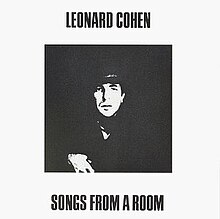
The first album I ever saved-up for and bought was Leonard Cohen's 'Songs from a Room', and album I still lovingly remove from its sleeve, rub clean and play on my turntable. For the most part, I taped my music off the radio and bought records on the rare occasion of my absolute-inner-need-to-have-it. And while I'm not excusing or condoning illegal downloads, I do think that the focus on this segment of music listeners has created a myopic and lopsided conversation on the topic of the current state of the Music Industry.

This 'inner-need' to have (that is 'own') the music one loves is felt across all generations, and I would argue that this need is only felt when music reaches true depth. There's a new generation of listeners who are still saving up their money to buy the music they must have on vinyl: 'The Police', 'Pink Flloyd', 'Led Zepplin', as well as 'Radiohead', Tom Krell, and Vampire Weekend.

The second point Anonymous makes: "Also, how does one explain the precipitous decline in music sales once downloading (and CD copying) became an option? If it were possible to completely stop piracy, I suspect there would be sudden increase in legal music purchasing."

In answering this point, the numbers continue to confound everyone:
Digital Music Leads Boost in Record Sales: "What’s the biggest surprise in the music industry this year? Music sales are actually up for the first time since 2004."
I would argue that this increase has less to do with file-sharing sites being shuttered than it has to to with other factors that are seldom if ever considered or measured:

* listeners are becoming more enamored by the music they are acquiring 

* music is becoming more portable and intrinsic to people's lives

* the price-point for singles has dropped to .99

There is also an ongoing debate as to why CD sales have declined - Some attribute this to a decline in overall album output by major record labels: 
When Is Downloading Music on the Internet Illegal?: "Organizations that support music sharing and downloading however have thrown a wrench into the statistics released by the music industry as they suggest some of these losses are due to a bad economy and fewer "new releases" hitting the market in some of those years. It is obvious that the music industry has to be losing some money due to Internet music file sharing, but finding the exact amount lost due to music downloading isn't so simple." 
Others attribute this to a 'disenchanted' listening public:
A $13 billion fantasy: latest music piracy study overstates effect of P2P: "The IPI study also assesses the increased demand for music if piracy didn't exist and assumes the market would remain as "intensely competitive" as it is today. The problem is that music fans are largely disenchanted with the market. By and large, music fans think that music is too expensive and that much of what is available isn't very good. 58 percent of those responding to a study commissioned by Rolling Stone magazine and the Associated Press said that music is declining in quality. And although the DRM situation is looking up these days, it can still be a confusing morass with unanticipated side effects for consumers..."
While yet others question the statistics to begin with:

RIAA's Statistics Don't Add Up to Piracy - "The RIAA's damage is all self-inflicted.They blamed the demise of the CD single on piracy, but the truth is that they just stopped making them, at least in the U.S. In 2003, they apparently decided they didn't need to make albums any longer and went back to selling singles. An industry with a 90% failure rate cuts its new product offering by more than 80% over a four year period. Then it starts suing people because sales are down and it's obviously all the fault of the single mothers, college kids and dead people."


I think a multi-dimensional view of the Music Industry is necessary, (see 'Chaos Theory' and 'Phase Space'): instead of thinking in one dimensional terms, perhaps a more compex analysis is needed - one that measures not only purchasing habits over time, but emotional and visceral dynamics through time and space - that is:

* purchasing trends as they correspond to how emotionally attached listeners are to the music they are compelled to buy

* the overall income of those who purchase CDs vs downloads

* how LEGAL downloads (offered daily by RCRD LBL, for example) have affected buying habits

* whether SoundScan (the industry standard) factors in small, lesser known and distributed record labels, when measuring CD sales

Julie Samuels in her excellent article "It’s Time for the Recording Industry to Stop Blaming "Piracy" and Start Finding A New Way" writes:
"As many — EFF included — have been saying for years, filesharing is not the reason that the recording industry has fallen on hard financial times. In fact, the recording industry's complaints that the sky is falling really only apply to the recording industry, and not musicians and the fans, who have seen increased music purchases, increased artist salaries, and the availability of more music than ever before. And now two new reports further debunk the recording industry's myth.
First, the London School of Economics released a paper finding that while filesharing may explain some of the decline in sales of physical copies of recorded music, the decline "should be explained by a combination of factors such as changing patterns in music consumption, decreasing disposable household incomes for leisure products and increasing sales of digital content through online platforms." And even if the sales of recorded music are down, there is an important distinction to draw: the recording industry may be hurting, but the music industry is thriving. For example, the LSE paper points out that in the UK in 2009, the revenues from live music shows outperformed recorded music sales."
There's a tendency - indeed, a need - to see the world in black and white, to understand it in logical terms, as though every issue and dilemma has a straight trajectory that we can graph and plot. But like weather patterns, species extinction, the secret life of ants, and the sound of caterpillars, there are some things that will forever reside in the realm of the unknown, beyond, perhaps, our full understanding... and, like a spinning LP, we can only circle around that mystery...